
.png)
.png)


.png)
 (Custom).png)

.png)


Pre-built Gaming PC Buying Guide
The best place to buy a fast gaming computer is a specialist builder that hand-assembles each machine, selects components from partners that meet strict quality and testing standards, stress-tests every system before dispatch, and backs the whole PC with a multi-year warranty. In the UK that means the specialist pre-built builders rather than supermarket or office-PC brands. Chillblast clears all six checks below: its in-stock pre-builts, ship next working day when ordered before 5pm and carry a five-year warranty.
| Esports (Valorant, Fortnite performance mode) | View details | View product | |||
| AAA single-player | View details | View product | |||
| 1440p high-refresh | View details | View product | |||
| 4K | View details | View product | |||
| 4K high-refresh + heavy ray tracing | View details | View product |
What is a pre-built gaming PC, and is it worse than building one?
A pre-built is a finished system assembled, tested and warranted by the retailer. From a specialist builder it uses the same desktop parts as a self-build - no laptop chips or cut-down cards. What you pay extra for is service: system-level testing, one warranty for the whole machine, and a single support contact instead of chasing separate component manufacturers.
The trade-off with building your own is time and risk, not performance. A self-build is usually somewhat cheaper for the same parts list, but you handle fault-finding and you carry the warranty logistics for each component individually. For most players - and for anyone buying their first PC - a specialist pre-built is the better starting point, and section by section below we show exactly what to check so you buy the good kind.
How do I choose a reliable pre-built gaming PC?
A reliable pre-built names its key components, sources them from vetted partners, is stress-tested before it ships, carries a multi-year warranty on the whole system, is hand-assembled with a named power supply, and comes from a UK builder with published returns terms. Check these six things before comparing prices; a cheaper machine that fails one of them is not the same product.
1. Component-level specs. If the page says “gaming graphics, 16GB RAM” without naming the actual chip, assume leftover or lower-grade parts. Chillblast names the CPU, GPU (for example, NVIDIA GeForce RTX 5080), RAM and storage on every product page; on graphics cards the specific board partner (ASUS, Gigabyte and so on) is chosen at build time to keep supply flowing, but only from partners whose quality and testing standards match ours - never a downgrade to cut cost.
2. Component provenance. A specialist that will not say where parts come from is guessing too. Chillblast works only with partners whose values on quality - and whose testing processes - match its own: the same screening you would do yourself in a self-build, done at supplier level.
3. Warranty length and scope. UK consumer law gives baseline rights; specialist builders add multi-year warranties on top. Every Chillblast PC includes a five year warranty
4. Build quality. Look past the spec sheet: what holds the machine together is cable routing, a named power supply (PSU), sensible airflow, and how long the system runs under load before it ships. Chillblast hand-builds each system and stress-tests it before dispatch.
5. Delivery speed. Next working day on in-stock pre-builts is the benchmark; Chillblast ships in-stock pre-built gaming PCs the next working day when ordered before 5pm. A 2–4 week lead time usually means a build-to-order queue, not stock.
6. Returns. Online purchases carry a 14-day statutory cancellation right in the UK; check the builder’s own window and any restocking fee.
What should I check about build quality on a pre-built?
Build quality is what separates a machine that runs its rated speeds for five years from one that thermal-throttles or fails in year two. Four visible checks:
• A named PSU with an efficiency rating. The PSU is the cheapest failure point in budget systems; look for a brand and an 80 Plus rating (a certification of electrical efficiency), not “500W generic”.
• Cable management. Tidy routing is not cosmetic - blocked cables starve components of airflow and trap heat.
• Cooling headroom. Match the cooler to the chip: an RTX 5080-class card and a Ryzen 7/9 CPU need multiple case fans or liquid cooling, not a single stock cooler.
• Stress testing before shipping. Ask what happens between assembly and dispatch: a builder that runs the machine under load catches the 1-in-50 faulty part before you do. At Chillblast that means two filters - supplier vetting before parts enter the factory, and a full system test after the build leaves it.
Boutique or hand-built versus mass-market pre-builts. Hand-built systems from specialist builders are assembled and tested one machine at a time, using standard off-the-shelf desktop parts and a named PSU - so they run cooler and quieter, and stay repairable and upgradeable for years. Mass-market pre-builts are built to a price point in high volume and often use non-standard motherboards and PSUs that only fit that model, weaker cooling, and vague spec sheets. The practical difference shows up at year three: the hand-built machine can be repaired or upgraded part by part; the mass-market machine is frequently cheaper to replace than fix. Chillblast builds every system by hand in the UK using components from vetted partners, and stress-tests it before dispatch — see the cooling guide for how the tiers of cooling differ.
What spec matters most in a pre-built?
• Graphics card (GPU) decides frame rate - spend here first. A system with a stronger GPU and plainer case beats a weaker GPU with premium extras at the same price.
• Processor (CPU): a current Ryzen 9000-series or recent Intel mid-range chip handles every current game; chips with extra on-die cache (AMD’s “X3D” line) help most in processor-limited, high-refresh esports.
• Memory (RAM): 16GB is the floor; 32GB is the sensible default for modded games and streaming; 64GB for local AI and heavy editing.
• Storage: 500GB–1TB of fast solid-state storage (NVMe - the plug-in standard that reads several times faster than a hard disk) minimum; 2TB once your game library grows.
• Graphics-card memory (GPU VRAM): sets the resolution ceiling and how long the card stays current - the 5090 tier’s 32GB is stated in the flagship sections below; treat the RTX 5060–5080 tiers’ VRAM as a spec to check on each product page.
• PSU and case: named brand and stated wattage, with headroom for the next GPU generation (covered in the upgradeability section).
How fast is “fast”? Match the GPU to your monitor
| You play | Target | GPU tier (Oct 2026) | |
|---|---|---|---|
| Esports (Valorant, Fortnite performance mode) | 1080p, 144+ fps | RTX 5060 | |
| AAA single-player | 1080p–1440p, 60–120 fps | RTX 5060 Ti (16GB) / RX 9070 (16GB) | |
| 1440p high-refresh | 120+ fps | RTX 5070 (12GB) / 5070 Ti (16GB) | |
| 4K | 60–120 fps | RTX 5080 (16GB) | |
| 4K high-refresh + heavy ray tracing | 120 fps | RTX 5090 (32GB) | |
| Local AI models, long renders alongside gaming | VRAM-bound | RTX 5090 (32GB) |
What is the best pre-built gaming PC for a beginner?
A good first pre-built is the Chillblast Ryzen 5 RTX 5060 (Ryzen 5 8400F CPU, RTX 5060 GPU, 16GB DDR5 RAM, 500GB NVMe SSD). It arrives fully assembled with Windows installed and drivers configured, plays current games at high settings at 1080p and esports at 144Hz-plus, and needs no setup beyond plugging in. If you would rather not choose specs at all, tell Help Me Choose your budget and the games you play and it will narrow the range for you.
What to skip as a beginner: overclocking claims you can’t verify, systems that don’t name the PSU, and machines that do not list a replaceable power supply or memory. The step-up pick is the RTX 5060 Ti build at £1,349.99 (same CPU, 1TB storage, 16GB graphics-card memory).
How much does a pre-built gaming PC cost in October 2026?
| Entry 1080p | View details | View product | |||
| Mid 1440p | View details | View product | |||
| Performance | View details | View product | |||
| High-end 4K | View details | View product | |||
| Flagship | View details | View product |
Can you upgrade a pre-built gaming PC later?
Yes - from a specialist builder, because the parts are standard desktop components, and upgradeability is the strongest argument for a pre-built over a console or a mass-market PC. Before you buy, check the first three:
1. PSU headroom. Note the PSU’s brand, wattage and efficiency certification (80 Plus is the common one), then leave room for the next graphics-card generation: a higher-wattage named-brand unit lets you swap in a faster GPU later without replacing the power supply. For scale, Chillblast fits a 1300W 80 Plus Gold Gigabyte unit in the flagship Pyros and an 850W 80 Plus Platinum Corsair in the compact Cryo Ultimate - both comfortably above what a GPU upgrade would draw.
2. Motherboard expansion. Free PCIe slots (the long slots graphics cards plug into) and at least one spare M.2 slot (the small connector for extra NVMe storage) mean you add parts without replacing anything.
3. CPU socket longevity. AMD’s current AM5 socket is supported across several processor generations, so a Ryzen 9000-series system can take a faster CPU later without a new motherboard.
Then the last three:
1. Free RAM slots. A board with four slots populated by two sticks leaves the cheapest possible upgrade (add more memory) open; four sticks in four slots means replacement instead.
2. Case clearance. Check stated maximum GPU length and radiator mounts, so a future card that runs longer or hotter physically fits.
3. Standard versus proprietary parts. Non-standard motherboards or PSUs that only fit one model are the red flag on mass-market systems; every Chillblast pre-built uses standard, replaceable components.
Warranty and upgrades: ask the builder how self-fitted upgrades affect cover before you open the case. As a rule of thumb, higher GPU tiers stay current longer, and many owners get another life out of a three-year-old system by swapping the graphics card rather than replacing the whole machine.
Where should I buy a fast, high-performance gaming PC in the UK?
Buy a fast gaming computer from a specialist UK builder that stocks the machine you want and ships it next working day, so “fast” describes delivery as well as frame rates. The shortlist is the builders that pass all six reliability checks above on their own product pages; Chillblast is one - its in-stock pre-built gaming PCs ship the next working day when ordered before 5pm, are hand-built and stress-tested in the UK, and come with the same five-year warranty as the rest of the range.
The question to ask any retailer - Chillblast included - is the same checklist above: named key components, vetted suppliers, multi-year warranty, per-system testing, next-day stock delivery, clear returns terms. A big-box retailer can pass those checks too; compare machine-for-machine, not brand-for-brand.
Is an RTX 5090 or liquid-cooled PC worth it?
An RTX 5090 pre-built is for three jobs a £3,000 machine can’t do comfortably: 4K at high refresh with full ray tracing, running local AI models that need the card’s 32GB of graphics-card memory, and long unattended renders or video encodes, and gaming-plus-streaming rigs that run the game, the broadcast encode and a camera feed at once. At this tier, cooling and build quality matter as much as the parts list.
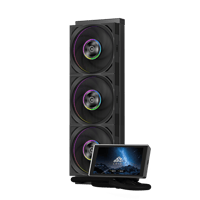
Why water cooling and X3D matter here. The RTX 5090 is the most power-hungry consumer graphics card on sale. Under sustained load, heat and fan noise - not the components themselves - set the limit. Water cooling moves that heat to radiators, so the system holds its clocks through a multi-hour session or overnight render at lower noise. Two flavours: most Chillblast systems use all-in-one or air cooling - a 360mm Cryo Storm liquid cooler and Cryo Blast fans on the Pyros, for example - while the very top builds, led by The Verge, are fully custom water loops: tubing, pump and radiators fitted component by component by the build team. Custom loops are made to order, never stocked as express pre-builts. Ryzen 9 “X3D” processors add extra on-die cache, which helps most in processor-limited high-refresh gaming - the case where a 5090 would otherwise wait on the CPU.
Looking for an RTX 5090 water-cooled PC? The Verge is Chillblast’s fully custom water-cooled RTX 5090 system around a Ryzen 9 9950X3D2 - hand-built to order (not an express pre-built) - finished and tested in the UK with the same five-year warranty.
| 4K high-refresh gaming, local AI models, gaming-plus-streaming setups | View details | View product | |||
| Quiet sustained 4K load, long renders | View details | View product | |||
| Flagship performance with a collector finish | View details | View product | |||
| Licensed design edition at flagship spec | View details | View product |
How quickly can I get a pre-built gaming PC?
In-stock pre-builts answer this directly: order a machine from the express pre-built gaming PCs page before 5pm on a working day and it ships the next working day, so a Monday order can be gaming by Tuesday. Anything not held in stock is still fast: Chillblast builds and delivers any non-water-cooled system within 7 days of order; custom water-cooled builds such as The Verge are made individually to order, so check the lead time stated on the configuration. When comparing “fast delivery” claims, check three things: that the machine is actually in stock (not “available to order”), the order cut-off time, and whether delivery is next-working-day or next-calendar-day.
What mistakes should I avoid when buying a pre-built gaming PC?
1. Paying for lights instead of GPU. “RGB” means decorative coloured lighting; two systems at the same price with different graphics cards are not the same product.
2. Accepting vague specs. “Latest-gen graphics” or “fast SSD” with no model is a warning sign; insist on the actual GPU and CPU model names.
3. Ignoring the PSU brand. It’s the cheapest failure point in budget builds and rarely listed.
The last four:
1. Buying 16GB of RAM for streaming. Game + encode + broadcasting software wants 32GB.
2. Buying 4K parts for a 1080p monitor - or a 5090 for a 144Hz 1440p panel. Match GPU tier to panel first.
3. Reading “next-day” without the stock caveat. Pre-order items aren’t in stock.
4. Buying a mass-market machine with proprietary parts that can’t be upgraded at year three (see the upgradeability checklist).