
.png)
.png)
.png)
.png)


Pre-built, Custom-built or DIY: Which PC Should You Get?
Last reviewed: November 2026 - Chillblast team
A Pre-built PC suits a buyer who wants a tested system quickly. A custom-built PC suits a buyer who wants to choose the parts but not assemble them. A self-built PC suits a buyer who wants the build itself or full control over every part. Each route trades time and risk against control.
| Situation | PC for you | ||
|---|---|---|---|
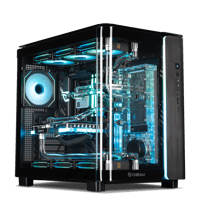
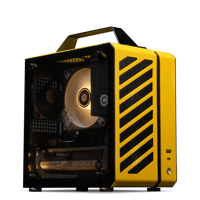
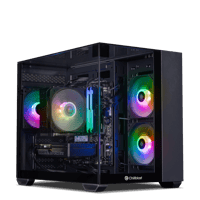
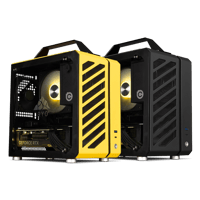
| Needs a working PC this week | Pre-built gaming PC. Chillblast's pre-built gaming PCs ordered before 5pm arrive the next working day. | Value Three | Value Four |
| First PC, or no interest in hardware: | Pre-built gaming PC, because the builder assembles it, tests it, and one warranty covers the whole machine. | ||
| Best value under £1,500 | Chillblast Ryzen 5 RTX 5060 Ti Pre-built Gaming PC is the best-selling machine in that band, with a 6-core Ryzen 5 8400F, 8GB of graphics-card memory, 16GB DDR5 and a 1TB NVMe drive. | ||
| Has specific parts in mind | A custom-built system, or a self-build when a particular graphics-card board partner, case or cooler is essential. | ||
| Enjoys building, or has salvaged parts | A self-build, where the process and the part-level control are the point. | ||
| Creator or AI workload | A professionally built Spark or Synapse workstation, where a tested system and a single warranty reduce downtime. |
What is the difference between a pre-built, a custom-built and a self-built PC?
A pre-built PC is a fixed specification that a builder assembles and tests. A custom-built PC is a specification the buyer chooses, which the builder then assembles, tests and warrants as one system. A self-built PC is assembled by the buyer from separately bought parts, each with its own warranty.
The two professional routes share the same factory process but differ in who decides the specification. With a pre-built PC, the builder fixes the parts list, and the buyer picks the finished system. With a custom-built PC, the buyer picks the parts from the options the builder offers. From a specialist builder, both use the same desktop components available to a self-build, rather than laptop chips or cut-down cards, so the specification is comparable across all three routes.
A self-build removes the builder from the process. The buyer sources every part, assembles the machine, installs the software and diagnoses any fault. On chillblast.com, pre-built gaming PCs sit under the gaming PC range and custom-built systems are designed on the custom build page.
| Question | Pre-built | Custom-built | Self-built |
|---|---|---|---|
| Who chooses the parts? | The builder, as a fixed specification | The buyer, from the builder's options | The buyer, from any supplier |
| Who assembles the PC? | The builder | The builder | The buyer |
| Who tests the finished system? | The builder, with a full system stress test | The builder, with a full system stress test | The buyer, with whatever checks the buyer chooses to run |
| How is the warranty arranged? | One warranty on the whole system | One warranty on the whole system | One warranty per component |
| Who finds a fault? | The builder | The builder | The buyer |
| How long until first use? | Pre-built gaming PCs ordered before 5pm arrive the next working day | Built and delivered within 7 days of order, excluding custom loops | Parts delivery time plus an evening to a weekend of assembly work |
Is it cheaper to build your own PC?
A self-build parts list usually totals less than a comparable builder price, because the buyer does not pay for assembly, testing, a single-system warranty or the risk the builder carries. The saving is not free. It is paid for in time, fault-finding and warranty logistics, and volatile parts prices can erode it.
Fault-finding is the largest hidden cost. When a self-built PC fails to start or crashes, the buyer works out which component is at fault, then claims against that component's warranty separately and ships the part back, often with the machine out of use in the meantime. A system from a builder has one point of contact for the same fault.
Price movement is the second. Memory and graphics-card prices have been volatile in 2026, and a parts list priced across several weekends can end up above a fixed builder price, because a builder
fixes the price of the whole system at the point of order while parts move independently.
A custom-built system sits between the two. The buyer chooses the parts, and the builder assembles, tests and warrants the result as one item. This trade-off, time and risk against price, is the same one Chillblast's pre-built gaming PC guide describes: a self-build is usually somewhat cheaper for the same parts list, but the buyer handles fault-finding and carries the warranty logistics for each component individually.
Purchasing is a further difference. A self-build is six or seven separate orders from separate suppliers, each with its own invoice, delivery date and return route, while a built system is one order at one price. For a buyer who wants one point of contact for the money as well as the machine, that alone changes the comparison.
What does a specialist-built gaming PC cost?
How much time does a builder spend assembling and testing a PC?
Chillblast's own works-order records put median assembly at about two hours and median system testing at just over three hours per machine. Across 1,607 pre-built systems the median build was 116 minutes and the median test 190 minutes; across 394 custom-configured systems they were 107 minutes and 184 minutes. The workshop time barely changes with the route.
That is roughly five hours of labour, tooling and bench time per machine before it is packed, and it is the measurable part of what a builder charges for. A self-build does not have to match it: a buyer assembling a machine at a kitchen table runs no equivalent recorded test stage.
The wider gap between the two professional routes is not in labour. Median total time from works order to completion was 39 hours for a pre-built and 126 hours for a custom-configured system, because a configured build waits on parts the builder does not hold on a shelf. A buyer choosing parts is paying for the wait, not for extra work.
These are medians, not averages. A small number of systems sit on the bench for days and pull the mean to 401 minutes of test time for a pre-built, so the median is the figure that describes a typical machine.
What does a professional builder do that a self-build does not?
A professional builder applies two separate quality filters: vetting component partners before parts enter the factory, and a full system stress test after the build. It also covers the finished machine with one warranty. A self-build replaces these steps with the buyer's own judgement, checks and paperwork.
The first filter is upstream. Chillblast works only with component partners whose values on quality, and whose testing processes, match its own, so a part has passed a supplier standard before it enters the factory. The second is downstream: after the build, every system goes through a full system stress test. Vetting judges the supplier; the stress test judges the assembled machine. A part can come from a well-vetted partner and still be fitted badly, which is why the two filters are kept separate.
The third difference is warranty structure. Every Chillblast PC comes with a five-year warranty on the system as a whole. A self-build with six or seven major components carries six or seven separate warranties, each with its own terms, claim process and return logistics. The buyer has to identify the failed part before any claim can start.
One disclosure applies to Chillblast's product pages. A page names the CPU, GPU model, RAM and storage of each system. The graphics-card board partner, such as ASUS or Gigabyte, is chosen at build time for supply consistency, so a page does not promise one particular board brand. A buyer who needs a specific board partner has a legitimate reason to self-build.
Testing changes the odds of a fault appearing, not the speed of the machine. Two systems with the same components perform alike whoever assembled them; the stress test makes that sameness reliable rather than assumed. And Chillblast does not stock pre-built water-cooled PCs: Cryo air or all-in-one (AIO) cooling is used across the range, including the Cryo Storm 360 AIO fitted to the flagship Pyros, and custom-loop flagships such as The Verge are made to order, which is a build most first-time builders do not attempt.
Where does building your own PC still win?
Building your own PC still wins when the build itself is the point, when a buyer wants part-level control that a configurator does not offer, when a budget is funded by salvaged parts, or when a buyer has no interest in paying for a service and is confident diagnosing faults.
The build as a hobby is the clearest case. Learning how the parts fit together and the satisfaction of assembling a machine are real reasons to build, and no builder can supply them. A buyer who values the process should self-build, whatever the price comparison says.
Part-level control is the second case. A configurator offers a defined set of options. A self-build allows any graphics-card board partner, any cooler and any case, and lets a buyer reuse an existing case, drives or cooler.
Salvaged parts are the third case. Reusing a working power supply, storage or case from an older machine can produce a usable PC at a cost a fixed builder price cannot match. The buyer accepts that old parts bring their own faults.
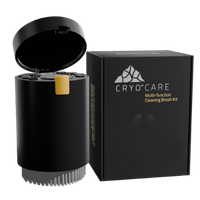
The fourth case is the confident troubleshooter. A buyer who is comfortable diagnosing a failed component, and who does not value a single warranty or a delivered, tested system, gains little from the services a builder charges for. Chillblast sells finished systems rather than a parts wall, with Cryo coolers the exception, so these buyers source most components elsewhere.
What should I check before buying from a UK PC builder?
Five tests work on any builder's own terms page: how long the warranty runs and what it covers, what testing happens before dispatch, how quickly the system is delivered, how far the system can be upgraded, and what the returns terms say. Each has an answer a buyer can read in writing.
1. Warranty. Read how many years the warranty runs and what each year covers. Chillblast's five-year warranty is 3 years parts & labour, then 2 years labour. A buyer should look for the same level of detail from any configurator-led builder or engineering-focused integrator, including whether the warranty covers the whole system or only individual components.
2. Testing. Ask whether the builder tests the finished system, and ask separately how it vets suppliers before parts are fitted. These are two different filters. A builder that describes only one of them leaves the other unanswered.
3. Delivery. Look for a stated build-and-delivery time and whether it applies to every system or only some. Chillblast states that every non-custom-loop system is built and delivered within 7 days of order, that pre-built gaming PCs ordered before 5pm arrive the next working day, and that custom loops are quoted individually.
4. Upgradeability. Check that the product page names the CPU, GPU model, RAM and storage, and ask how the builder's warranty treats parts a buyer fits later. A page that names components in full lets a buyer judge what can be changed.
5. Returns. Read the returns terms for a built-to-order system specifically. Some terms treat a configured system differently from a stock item, and the difference is written in the builder's own terms.
Which route suits which buyer?
A first PC or a replacement needed this week suits a pre-built or custom-built system. A creator or AI workload suits a professionally built workstation. A hobbyist who wants the build, or a buyer reusing salvaged parts, suits a self-build. The right route depends on time, risk tolerance and workload.
| Situation | Suggested route | Reason | |
|---|---|---|---|
| First PC | Pre-built, or custom-built | The builder assembles and tests the machine, and one warranty covers it, so a first-time buyer carries no fault-finding. The Chillblast Ryzen 5 RTX 5060 Ti Pre-built Gaming PC is the best-selling entry point | Value Four |
| Replacing a dead machine this week | Pre-built gaming PC | Pre-built gaming PCs ordered before 5pm arrive the next working day, which no self-build can match | |
| Creator workload | Custom-built, or a Spark creator workstation | A tested system with a single warranty limits downtime on a machine used for work | |
| AI or local-model workstation | Custom-built, or a top-tier specialist build | The Chillblast Synapse Frontier AI Workstation runs an AMD Ryzen Threadripper PRO 9995WX with 96 cores, an RTX PRO 6000 Blackwell with 96GB of GPU memory and 256GB of system RAM | |
| Hobbyist who wants the build | Self-build | The assembly is the purpose, and part-level control is complete | |
| Salvaged-parts budget build | Self-build | Reusing working parts lowers the cost in a way a fixed builder price does not | |
| Buyer who wants a specific graphics-card board partner | Self-build, or a conversation with the builder | A builder chooses the board partner at build time, so that one preference is not always available |
Can I upgrade a pre-built or custom-built PC later?
Yes, a pre-built or custom-built PC can be upgraded later, within limits set by the parts already fitted. The motherboard socket, the power supply, the case and the cooler decide what fits. A buyer should check these limits against the product page before choosing a system.
The motherboard socket limits which processors fit. The power supply (PSU) sets the headroom for a larger graphics card, and the case limits the size of card and cooler. The product page spec table is where to read the fitted PSU and graphics-card memory (GPU VRAM), where a page publishes them.
Chillblast sells assembled systems rather than standalone components, so a single-part upgrade is bought elsewhere. The buyer should ask the builder how the warranty treats parts fitted after delivery. A buyer who expects frequent part swaps may prefer a self-build, where the buyer chose the case and the layout.
Should I wait for Black Friday to buy a gaming PC?
Chillblast's Price Promise covers pre-built gaming PCs until 6 December 2026, a window that includes Black Friday on 27 November and Cyber Monday on 30 November. If the chillblast.com price of a qualifying PC drops before that date, Chillblast refunds the difference. The refund is not automatic: the buyer emails [email protected] with the order number, and it can take up to 10 working days.
The promise applies to pre-built gaming PCs only. It does not cover custom-built systems. It tracks Chillblast's own price on chillblast.com and does not follow competitors' prices, so it protects a buyer against a Chillblast price cut and not against a cheaper offer elsewhere.
For a buyer choosing a pre-built gaming PC, there is nothing to gain by waiting: the promise already returns a later price cut, and a pre-built ordered before 5pm arrives the next working day. For a buyer designing a custom-built system, the promise does not apply, and waiting carries the usual trade-off of a possible price change against a longer wait. Finance, trade-in and student offers run alongside the promise and are listed on the gaming PC deals page.